








Scientific Research for Even Greener Wind Parks
Can wind parks be even more sustainable than they already are? The simple answer is 'yes'. Together with research institutions and other partners, Tata Steel Nederland investigates how the new generation of supporting structures for wind turbines can be built to be just as robust, with less steel, but strong and competitive. The research involves intensive collaboration with stakeholders in the wind turbine market. The goal is to commence a pilot tubular tower for a wind turbine in 2027.
Tata Steel contributes daily to the green transition that our country is currently undergoing, in multiple ways. This includes supplying steel produces with more scrap and less CO2 emissions, improving energy efficiency in all steel production processes, providing stronger steel to enhance vehicle safety and reduce fuel consumption, delivering smart steel to minimize total losses, producing tinplate to extend the shelf life of canned food and reduce food waste, supplying high-tech steel for longer-lasting and leak-resistant batteries.
Less steel, same strength, more competitive
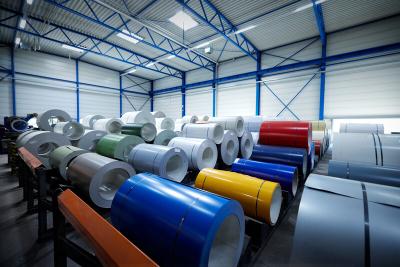
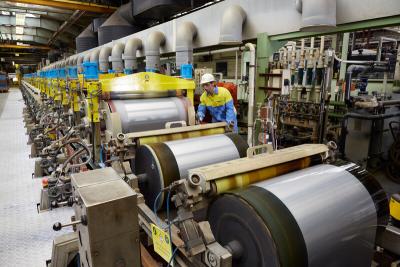
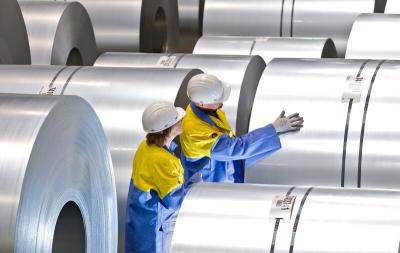
Wind parks have not yet been mentioned in this sum-up. Why not? Because supporting structures for wind turbines are made of very thick steel plates, and machined ring flanges which are often made of more than 100 mm thick steel. Tata Steel Nederland specializes in high-quality thinner steel, in the form of coiled steel. Flat-rolled steel, which is used in our cars, washing machines, and food cans. Wind towers are made from plate thickness ranging from 40 to 100 mm, which are welded into rings, then rings welded into tower segments and then connected in-situ by ring flanges into a tower.
However, this may change soon, as a team of researchers from Tata Steel Nederland, in collaboration with, amongst others TU Delft, explores constructing wind towers with thinner steel plates that are just as strong and more competitive, representing a new advancement in wind tower construction. Hans van der Weijde, R&D Director Tata Steel: “This involves researching new and alternative forms of steel structures and connections, such as wind turbine assembly with (stiffened) panels or with spiral-like steel structures or with double-walled surfaces. Various industry stakeholders are involved in this research, as any technical innovations must also be practical and feasible.” This industrial consortium is led by Tata Steel Netherlands and TU Delft. Dr. Milan Veljkovic, Professor Steel and Composite Structures states: ”The wind turbines’ double-skin shell is a hybrid structure requiring innovation in connecting tower segments. Our main motivation is to improve the sustainability and competitiveness of such towers.”
Innovation for an extended lifespan
In addition to reducing steel usage, another focus of this research is to extend the lifespan of wind towers. This goal aligns with the redeveloping of wind turbines to last longer. Wind towers also have to meet these targets in the nearby future. The current generation of wind turbines typically has a lifespan of 20 to 25 years. With these new development goals, a lifespan of more than 30 years is being aimed for. Furthermore, this new generation of even more sustainable wind turbines should be suitable for both onshore and offshore applications. With the planned green steel investments in IJmuiden, Tata Steel aims to make a significant contribution to the production of green energy using wind turbines manufactured from green steel.