


















A home for birds and bats on our site
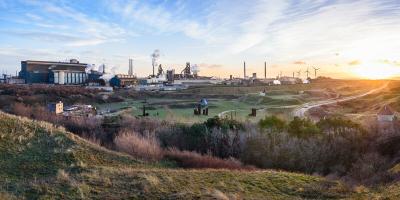
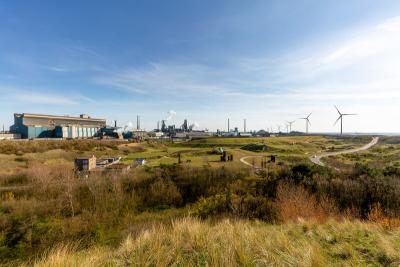
When driving through our site, you might mainly notice installations, factories, and storage areas. But if you look more closely, you’ll discover something else: a surprising amount of nature. Between and on the buildings, dozens of small wooden nest boxes are hanging. They provide birds and bats with a safe home and contribute to biodiversity on our site.
400 football fields
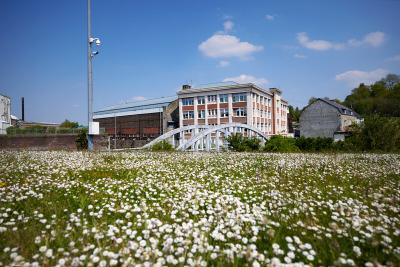
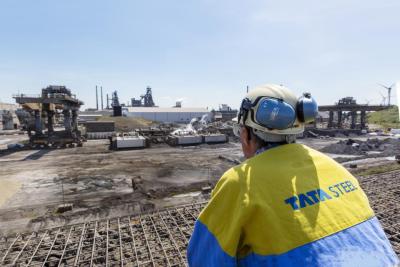
“Many people don’t realize how much green space we actually have,” says Jeroen van Vlaanderen, Asset Owner Infra and Sites. “If you add it all up, you quickly reach around 250 hectares of green space. That’s about 400 football fields. That’s quite a lot, and it makes it an interesting habitat for different species.”
A great initiative 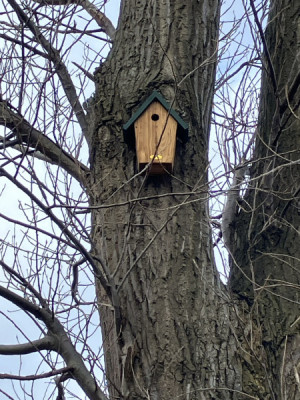
The idea for the bird and bat boxes came through contact with a retired colleague. Jeroen explains: “Through him, we came into contact with Veel in Hout, a social workplace in Heemskerk where nest boxes are made. That immediately made us think this is a very beautiful initiative. By now, bird and bat boxes have been installed in various locations across the site.” The installation of the boxes fits well with our Green Steel project, in which parts of the site are being redesigned. The nest boxes are a valuable addition to the natural shelter and nesting places that are already present.
A corridor across our site
According to ecologist Piet Admiraal, our site is surprisingly suitable for certain species. “Especially building-dwelling species benefit from the boxes,” he explains. “Think of bats and tits, but also the black redstart, a migratory bird that finds a temporary home here during the breeding season. These species thrive in an environment with both buildings and green areas. And we have plenty of that combination here.” In total, there are now 75 boxes installed on the site: fifty for birds and 25 for bats. The locations have been carefully selected. “Most boxes are placed in or near green areas. But we have also installed boxes near buildings, because some species prefer to nest there. In places where natural nesting sites are scarce, the boxes offer a solution. They essentially fill a gap. Not everywhere there are trees with natural cavities. With these boxes, we still provide animals with a suitable place,” Piet explains. “In this way, we connect different habitats. It creates a corridor that allows animals to move more easily across the site, strengthening nature,” Jeroen adds.
Safe shelters
For birds, the boxes are mainly used as nesting sites in spring and summer. Some species also use them as shelters in winter. Bats mainly use the boxes as summer roosts, where they rest during the day. In addition to bird and bat boxes, we also have bat bunkers on our site. During the annual survey, these were found to be well used. Across the four bunkers, nineteen Daubenton’s bats and four brown long-eared bats were counted.
Preserving ecological value
But the project goes beyond just providing a place for animals to sleep. “The most important thing is that we preserve and preferably enhance ecological value,” says Jeroen. “We need to take nature into account in all activities on the site. Our nature policy is laid down in a management plan. It describes the measures we take to preserve and strengthen nature and biodiversity. In addition, we are working on supplementary plans for specific topics, so that everything ultimately comes together in one clear approach,” Piet adds. According to him, there are still plenty of opportunities. “The site is large enough for more initiatives, such as ecological site management and additional nest boxes for different species. This is really just the beginning.”