















Striking greenery set within steel and installations
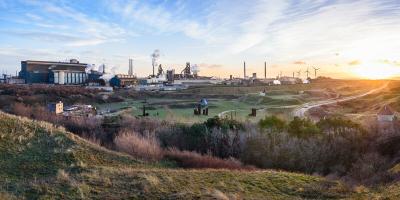
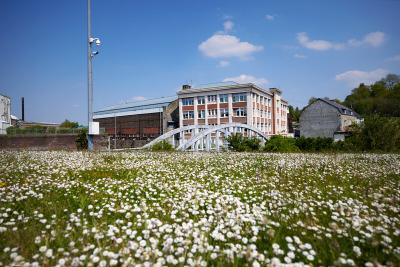
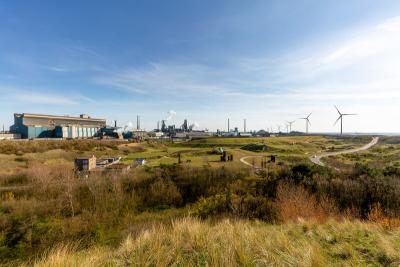
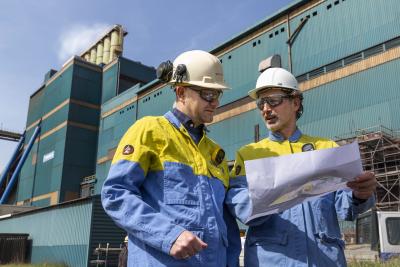
Anyone walking around here can just come across flower-rich slopes, woodland, scrub and open grasslands, with the occasional patches of damp dune valleys. And yet this is never the first thing that comes to mind when people visit the site. Between our factories, surprisingly rich vegetation is thriving. Ecologist Piet Admiraal and site manager Perry Buijsman are working together to not only preserve biodiversity, but strengthen it step by step. “It starts with awareness and policy,” says Piet. “Then it gets better step by step.”
Unique species on our site
All sorts of things grow and bloom across the site. Piet says: “In several places we have dune slack vegetation. These are very special places.” Among the species growing there are the marsh helleborine, military orchid, common marsh orchid and bee orchid. One species particularly stands out: “That is the lizard orchid,” Piet explains. “It is legally protected and was identified during the ecological survey carried out for the Heracles Groen Staal project. Naturally, I’m very keen to see it in bloom, so Perry is not allowed to mow it down,” the ecologist jokes. But smooth cat's ear, a highly protected species, also has one known growing location on our site. Many people are unaware of this, Perry notes: “Many people think nothing grows here, even though there are species here that you hardly see elsewhere, including in nature reserves.” Piet adds: “At the right time of year, everything is beautifully in bloom. It is really much more than just brambles and nettles. Even after 100 years of industry, we still have patches of genuinely old oak woodland.”
“I’m very keen to see that lizard orchid in flower”
From policy to practice
We also want to preserve all this remarkable greenery. In projects that fall outside routine maintenance, biodiversity is already being considered in a structured way. “What we already do very well is the project-based work,” Piet explains. “That is always preceded by a flora and fauna survey.” A concrete example is the Heracles project, where it was investigated in advance which protected species were present. To apply that same care consistently everywhere, Piet is working with colleagues from HSE and Sustainability on a biodiversity policy. “That way, we get clear guidelines and a clear way of working down on paper,” says Piet. “And ultimately, the mandate to make choices as well.” In addition, for routine site management we are looking at working with a code of conduct for nature management. This makes it possible to plan activities more effectively – for example outside the breeding season – in order to prevent damage to flora and fauna.
The strength of working together
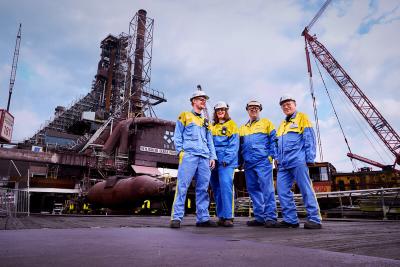
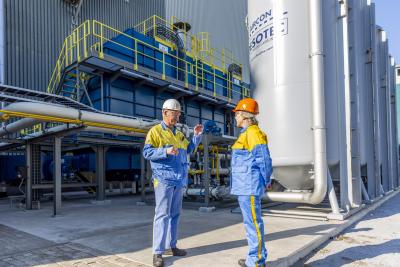
The collaboration between Piet and Perry proved crucial. “Things were happening on site where we did not always know what was and was not allowed,” says Perry. “By involving Piet, we sometimes discovered that things had to be done differently.”
By now, the two work well together and know how to find each other easily. The next step is to embed biodiversity across the whole site. Perry says: “We want to prevent work from being carried out and only afterwards realising that a lot of greenery has disappeared. We would much rather be involved in advance, so we can help think through alternatives.” Piet adds: “And then we can also combine things efficiently. If excavation work is planned in a particular location, for example, we can combine it straight away with invasive species control. If you are digging anyway, you might as well remove those plants at the same time and dispose of them properly.”
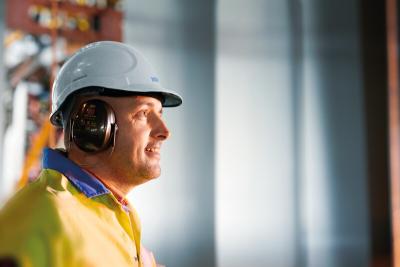
“Piet has driven quite a few rounds to map unique species”
Making different choices
According to Perry and Piet, what is still missing is mainly a more careful way of working. “At the moment, we often are still a bit too rigorous,” Perry explains. Careful working often comes down to small, practical choices. Piet says: “When mowing, for example, leave some corners untouched and do not do everything at once. That way, insects keep their habitat.” Green management is also being viewed differently. “Safety is of course the most important thing. This means sometimes, for example, a tree in the sightline by the railway must go. Instead of felling that tree, we can also replant it elsewhere on the site,” Piet says enthusiastically. “That immediately improves the site as well,” Perry adds. In this way, unwanted trees or shrubs in one location can be given a new place on the site, instead of buying new non-native planting stock. That is more sustainable and, in the long term, cheaper.
Together we preserve our unique nature
The ambition is clear: first preserve what we have and subsequently improve it. “We want to preserve what we have – and add an ecological plus to it,” says Piet. “That can only be done together. In this way, with small steps, we can make a big difference together.”