








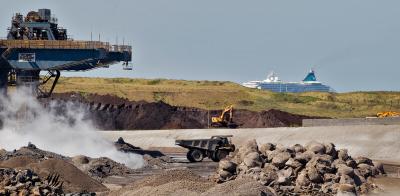







Transporting boulders, gravel or other heavy materials?
This is what you need
Anyone transporting boulders, rubble or gravel needs a trailer that can take a beating. That’s why we developed Valast: wear‑resistant steel with extremely high strength, specifically designed for heavy-duty applications. Our R&D expert Carel ten Horn explains how we test this steel and what it can deliver.
Valast combines wear resistance with high strength. This makes it better able to withstand heavy loads than ‘standard’ steel. As a result, our customers lose less material, require less maintenance and benefit from a longer trailer lifespan.
But it’s not just about wear: denting also plays a role. This can occur, for example, when a stone block lands in the trailer bed from a height of one to two metres during loading or unloading. And that’s not merely a cosmetic issue — if the impact is too severe, the material can crack.
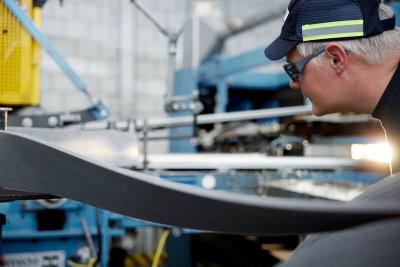
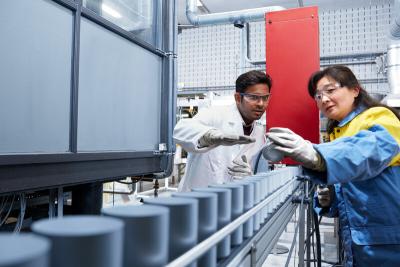
To prevent this, we went in search of ultra‑strong steel and use simulation software that is also employed in the automotive industry for crash tests. “That gives us a good indication of what the material can handle,” says Carel. “But to be sure our predictions are correct, we also carry out laboratory tests.”
When a steel grade is stronger, it can sometimes be made thinner while still bearing the same load. This is interesting for trailer builders and transport companies, because on the road there is a maximum allowed mass for vehicle plus load. A lighter vehicle means you can carry more. “But thinner is never a goal in itself,” Carel emphasises. “Ultimately, it’s about the customer’s overall set of requirements, so we also look at dent resistance, wear resistance and fatigue.”
For example, dent resistance may create room to opt for thinner steel, while other criteria may require additional safety margins. “We assess which thickness and steel strength are suitable for each individual component. And if testing shows that a chosen thickness is too optimistic, we naturally adjust it."
Ultimately, the goal is to build more robust trailers with less weight and greater payload capacity - without compromising reliability.

How far are we already? “In the first phase, we carried out calculations using a trailer model as well as a simplified test: a plate of approximately 2 by 2 metres onto which a 1,000‑kilogram block is dropped. We observed that increased hardness (for example from Valast 400 to Valast 500) does indeed create opportunities to reduce plate thickness while maintaining a comparable dent response.”
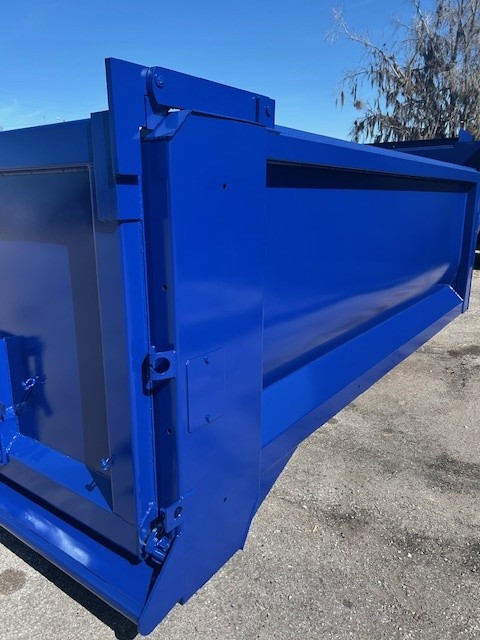
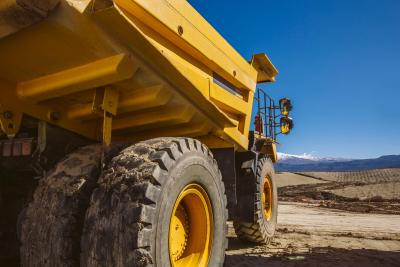
Below an image of a tipper made out of Valast 450