












Previously in Autoweek: “The car factory that doesn’t make cars”
The steel from Tata Steel Nederland is used in virtually every car brand. And it's very special steel. Because the average car contains more than twenty different types of steel. After all, the steel in a car door needs different properties than the chassis or the front that must be able to absorb crashes.
Producing each type of steel requires perfect control of the production process. And that's something we're very good at at Tata Steel Nederland. So, without a single car rolling off the line here, Dutch steel makes cars around the world safer, more sustainable, and more innovative.
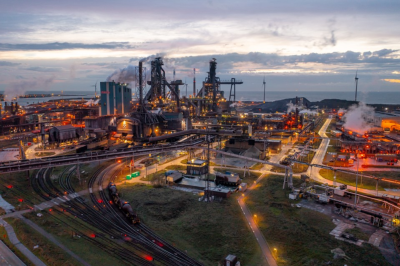
Autoweek previously visited our site in IJmuiden and wrote an article about it (in Dutch). “Many manufacturers around the world build cars with Dutch steel.”
Different types of steel
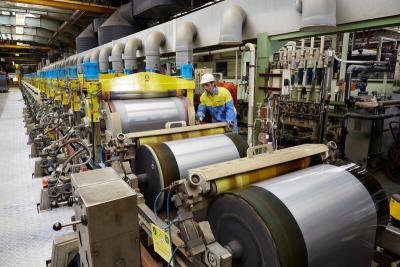
“We process the steel to determine its properties. We add alloying elements or desulphurise it,” says Robin Kager, Director of Automotive Sales and Marketing. “In the next step, rolling, we can also influence properties by adjusting the speed and temperature.”
Properties like strength or formability. For example, the crumple zone of a car must deform relatively easily to absorb the impact of a crash. But the exterior of cars also uses relatively soft steel to allow for sleek design lines. Meanwhile, the chassis and door pillars are made of stronger steel.
Safety through Tata Steel’s crash test
Safety is an essential requirement in car manufacturing. Autoweek witnessed a crash simulation. “[You can] precisely predict how a beam will deform in a collision by adding carefully calculated indentations. During our visit, we witnessed a crash test where a 150-kilo weight was dropped from fifteen metres onto a beam. The beam folded like an accordion. As a result, it absorbed much more energy than if it had bent sideways on impact,” Autoweek reported.
Strong steel for greater sustainability
Stronger steel also means less steel is needed. That makes modern cars lighter, so they consume less electricity or fuel. We also focus on other forms of sustainability. A few points from the Autoweek article:
• We produce ultra-smooth steel for car exteriors, with a special finish. This improves the paint quality and reduces the amount of paint needed.
• We offer a complete range for electric vehicles. Not just steel for the body and chassis, but also specialised steels for batteries and electric motors. Did you know that thanks in part to our thinner steel, electric motors have become up to 50% more efficient over the past six years?
• Our goal is to use around 30% scrap steel by 2030 (in 2023, this was still 17%).
• We're transforming our production process: replacing coal first with gas, and later with hydrogen. And at the same time, we’re introducing an electric furnace powered by green electricity.
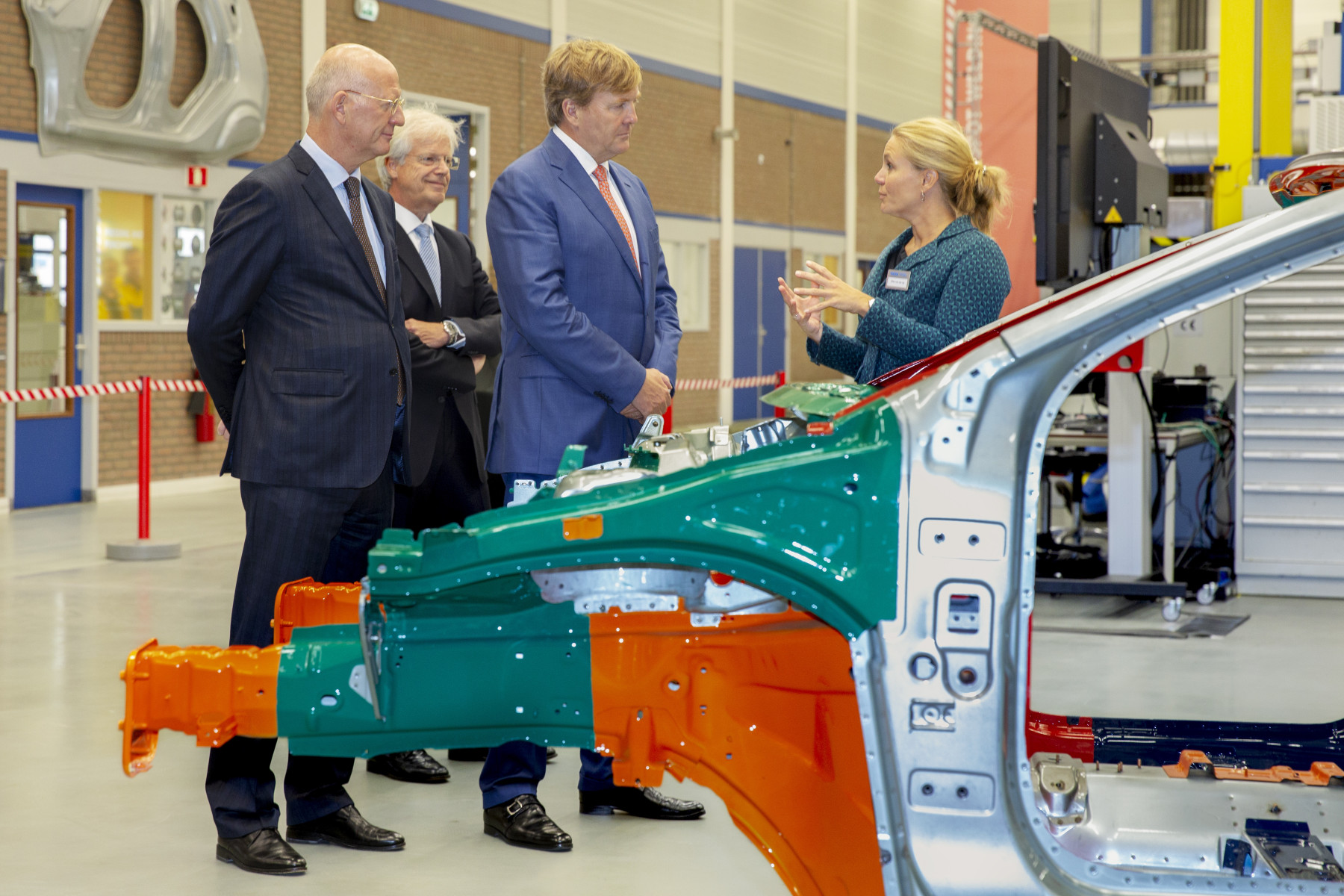
HM King Willem-Alexander receives an explanation of the different steel types in a car during our 100-year anniversary
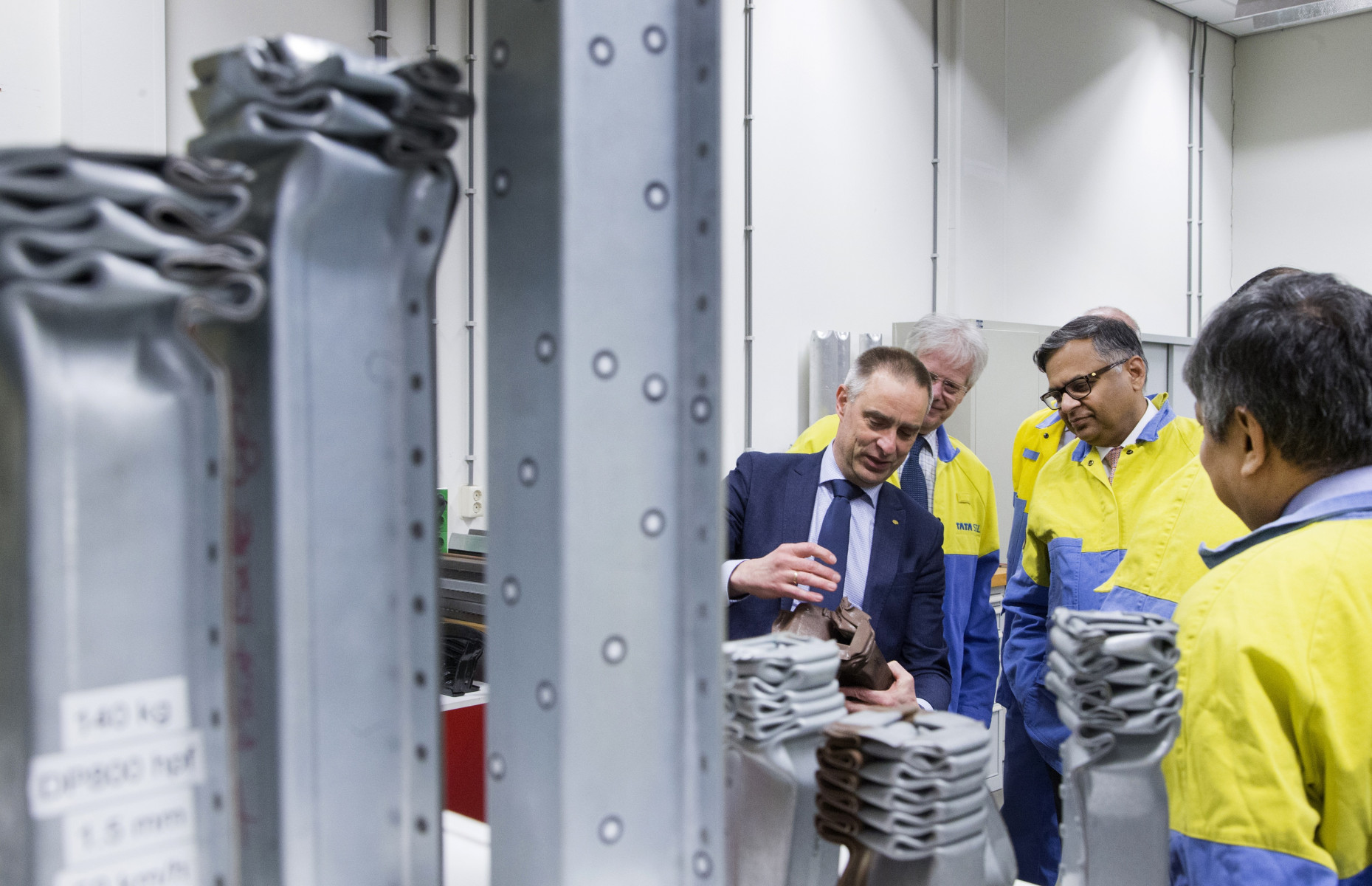
At the innovation centre, Nico Langerak explains how the steel folds during a collision.
Our innovations not only make these smart structures possible, but also enable us to make stronger steel. Steel that keeps passengers safe.
The full article can be read in issue 14 of Autoweek (2025), and on the Autoweek website.